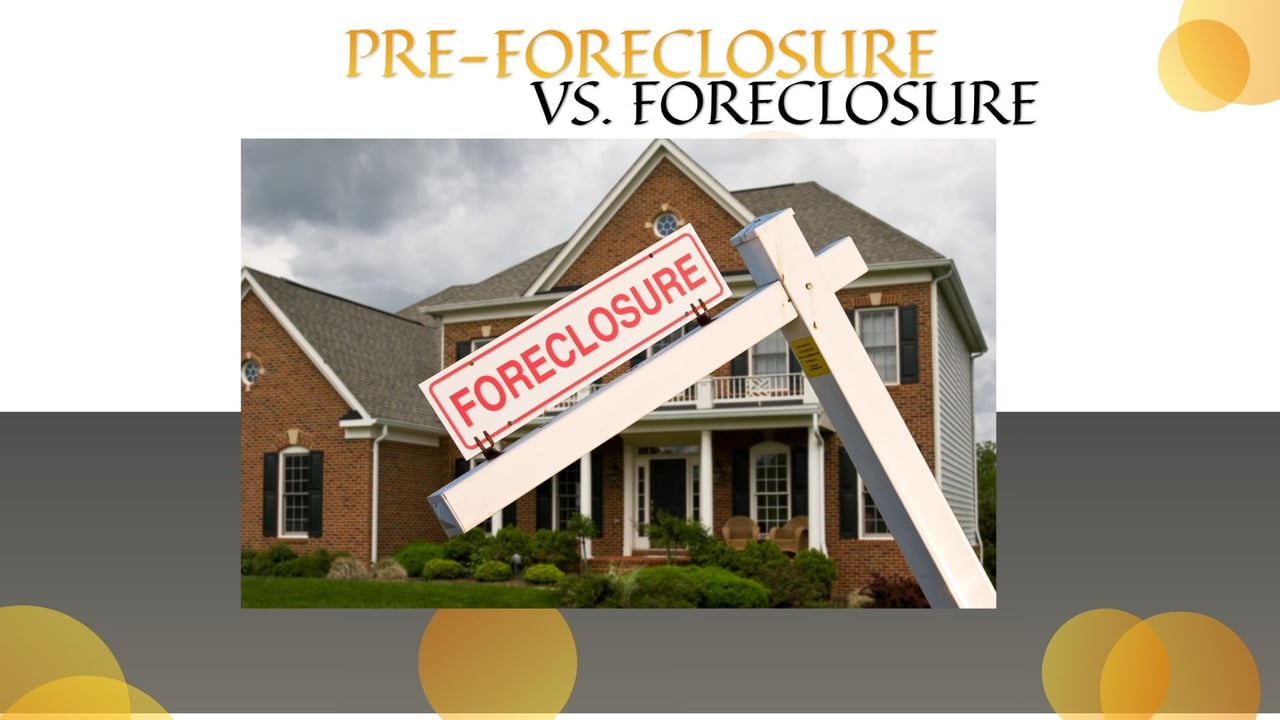
Pre-Foreclosure vs. Foreclosure: What's the Difference?
Many homeowners use the terms "Pre-Foreclosure" and "Foreclosure" interchangeably, but they are two very different stages in the mortgage process. Understanding the difference can help you make informed decisions before it's too late.
What Is Pre-Foreclosure?
Pre-Foreclosure is the period after a homeowner has fallen behind on mortgage payments but before the lender has taken ownership of the property.
During Pre-Foreclosure:
- You still legally own your home.
- You may still have equity.
- You have options to avoid foreclosure.
- You can communicate with your lender to explore solutions.
- You may be able to sell the property before foreclosure is completed.
This stage is often the best opportunity to regain financial control.
What Is Foreclosure?
Foreclosure occurs when the lender completes the legal process of taking possession of the property because the mortgage has not been brought current or otherwise resolved.
Once foreclosure is complete:
- The homeowner loses ownership of the property.
- The home may be sold at auction or become bank-owned.
- Moving out becomes necessary.
- Recovering financially may take several years.
Foreclosure can remain on your credit report for years and may make qualifying for future loans more difficult.
Side-by-Side Comparison
Pre-Foreclosure | Foreclosure |
You still own the home | Ownership transfers to the lender or a new buyer |
Multiple options are available | Very limited options remain |
Opportunity to protect equity | Equity may be lost |
Less severe impact on credit | Greater long-term credit impact |
Can often sell the home | Home is typically sold through legal proceedings |
Why Timing Is So Important
One of the biggest mistakes homeowners make is waiting too long to ask for help.
Many people ignore letters because they feel embarrassed or overwhelmed. Unfortunately, delaying action reduces the number of available solutions.
The sooner you speak with your lender or a qualified real estate professional, the more flexibility you typically have.
Signs You Should Act Immediately
- You've missed one or more mortgage payments.
- You're relying on credit cards to pay bills.
- You've received notices from your lender.
- Your income has changed significantly.
- You're worried you may miss your next mortgage payment.
These warning signs don't necessarily mean foreclosure is inevitable—but they do mean it's time to develop a plan.
Frequently Asked Questions
Can I sell my home during Pre-Foreclosure?
Yes. In many cases, homeowners can sell their property before foreclosure is finalized, which may help protect equity and reduce the financial impact.
Will foreclosure ruin my credit forever?
No. While foreclosure has a significant impact on credit, rebuilding is possible through consistent on-time payments, reducing debt, and practicing healthy financial habits.
Should I ignore letters from my mortgage company?
No. Opening and responding to communications from your lender gives you the best chance of finding a solution.
Final Thoughts
Pre-Foreclosure is a warning sign—not the end of the road. It offers homeowners time to evaluate their options and take action. Foreclosure, on the other hand, is the legal conclusion of that process when no resolution has been reached.
If you're facing financial hardship, remember that acting early often leads to better outcomes. Seeking professional guidance can help you understand your options and make decisions that support your long-term financial goals.
